 Massachusetts Workers Compensation Lawyers Blog



Moreau v. Transp. Ins. Co., a workers’ compensation appeal from Supreme Court of Montana, involved claimant who work at an asbestos mine from 1963 until 1992. Claimant died as a result of asbestos-related lung cancer in 2009. Claimant’s surviving spouse, in her capacity as personal representative of claimant’s estate, filed a claim with employer’s workers’ compensation insurance carrier for benefits due to an occupational disease. Insurance carrier denied her claim.
 In 2012, she filed a claim before the workers’ compensation commission requesting insurance company be found liable for claimant’s medical expenses. The following year, insurance company agreed to liability and entered into a settlement agreement to pay for medical expenses.
Employer paid providers who had already paid for claimant’s medical expenses and also reimbursed his estate for money it spent prior to his death. One provider, which had already paid $95,000, was a fund set up by claimant’s employer (asbestos mine owner) to compensate employees who developed asbestos-related injuries. Both the fund and employer refused to accept any reimbursement from insurance company. Claimant demanded any money declined by employer or fund be given to the estate.
Continue reading
 Prior to becoming ill, claimant had accrued around 6,000 hours of paid sick leave. His employer paid out his sick leave prior to retirement in the amount of approximately $40,000. This sick leave payout was roughly equivalent to his annual salary. He used the balance of his sick leave, as permitted, to earn another year of employment credit with respect to his retirement plan.
 In 2003, claimant returned to the school system, and his second day back on the job, two students he refused to let into the classroom due their disruptive behavior assaulted him. His specific claim was that one student injured his shoulder when he pushed claimant into the doorframe to get past him. He also alleged one student continued to the threaten him and told claimant “[he] was going to put a put a cap in his ass.” The other students repeatedly mocked claimant for the remainder of the day, making teaching virtually impossible. Claimant never returned to teach at the school.
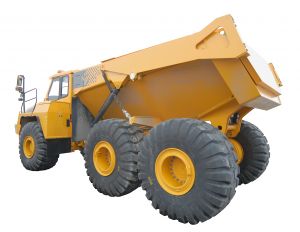 While driving, claimant was struck from behind by a shovel bucket of another huge piece of mining equipment. According to court records, the shovel bucket was large enough to hold an automobile. It hit the rack of the dump truck located behind the operator’s cab. Claimant testified the force from the impact caused his entire body to go numb and to nearly knock him unconscious. He was not sure where he was or what he was doing following the collision and was taken to the emergency room.
 Employer’s insurance company was unable to find a center he could afford on the less than $400 he was receiving in workers’ compensation benefits they were paying him. He was also unable to seek federal disability assistance under the Social Security Administration (SSA) due to his status as an undocumented worker from Mexico. Even without an assisted living facility, he was in need of wheelchair accessible housing, with appropriate accommodations, and access to public transportation. Employer’s insurance company case manager tried to assist him with finding suitable housing but was again unable to help him.
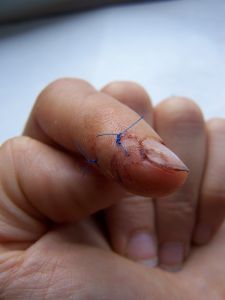 The state workers’ compensation bureau awarded claimant benefits for the amputation of his four fingers after the accident, allowed a further claim for a one-third disability in his index finger in 1985, and another claim in 1990 for two-thirds loss of his other three fingers.
 A recent news article from the
  There was a workplace accident involving the hay wagon, and claimant was seriously injured and is now a paraplegic. His spine was crushed by the wagon. Claimant filed a civil lawsuit in state court against farmer and his daughter. Claimant also filed a lawsuit the same day with farmer and his daughter against farmer’s insurance company in which they sought a declaratory judgment claimant was covered by farmer’s General Commercial Liability insurance plan. Insurance company also sought a declaratory judgment finding claimant was not covered by the insurance policy.